Roof Storm Damage in South Texas: When to Call a Roofer vs. Your Insurance First

Roof Storm Damage in South Texas: When to Call a Roofer vs. Your Insurance First

After a South Texas storm, most homeowners should get a roofer’s inspection first, then file the insurance claim, unless the policy specifically requires notifying the insurer before any contractor sets foot on the roof.

A hailstorm rolls through the area, and the next morning you’re standing in the yard staring up at your roof, phone in hand, not sure who to call. Your roofer? Your insurance company? Both? The order matters more than most people realize. Call the wrong party first, and you can undervalue your claim, miss a filing deadline, or hand a door-knocking scammer the keys to your roof. Roof storm damage is also easy to misjudge from the ground, which is exactly why the decision trips people up.

This guide walks through the call-a-roofer-or-insurance-first decision the way an experienced South Texas roofer would, including the local hail patterns, the Texas claim rules, the deadlines that actually bite, and the costs you’re looking at in 2026.

Key Takeaways

  • In most cases, a free roofer inspection first protects your claim, because trained eyes catch hail bruising and lifted shingles a quick glance misses.
  • Texas gives you a legal floor of one year to file a storm claim, but many policies want notice within 90 to 180 days, so move fast.
  • Any contractor who offers to “waive” or “eat” your deductible is breaking Texas law. Walk away.
  • Roof replacement in the South Texas market typically runs $12,500 to $18,000 for architectural asphalt shingles in 2026.

Roofer or Insurance First? The Short Answer

For typical hail or wind damage, calling a licensed roofer first is the safer move, since an inspection costs nothing, documents the damage properly, and tells you whether a claim is even worth filing.

There’s a catch worth knowing up front. Some homeowner policies include language requiring you to report damage to the insurer before any repair work begins. If yours does, follow it. An early roofer inspection is still fine in that case, because looking is not repairing. The table below sorts the common situations.

Your situation after the stormCall firstWhy
Visible damage, no active leakRooferFree inspection documents everything before the adjuster arrives and tells you if a claim beats your deductible
Active leak, water coming insideRooferA roofer can tarp and dry-in the roof immediately to stop further damage, then you file
Policy says report damage before repairsInsuranceComply with the policy, then have a roofer inspect alongside the adjuster
Minor cosmetic marks, old roofRooferHonest roofer may tell you the damage falls under your deductible, saving you a pointless claim on your record
Whole neighborhood hit, widespread damageRooferGet on a reputable local roofer’s schedule early before storm chasers flood the area
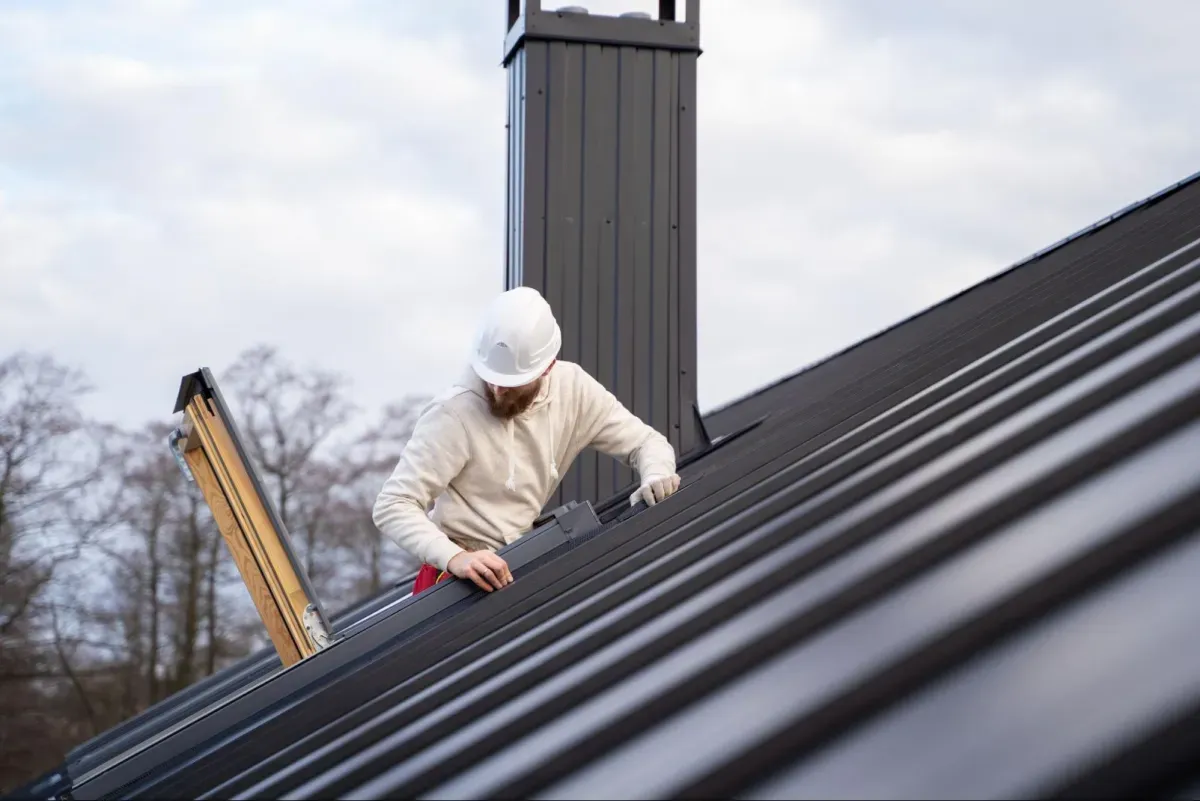
Roofer performing metal roof repairs
Roof Storm Damage in South Texas: When to Call a Roofer vs. Your Insurance First 5

When to Call a Roofer First

Calling a roofer first works because storm damage is often subtle, and a trained inspector spots the cracked mats, lifted shingles, and broken sealant strips that decide whether a claim gets approved.

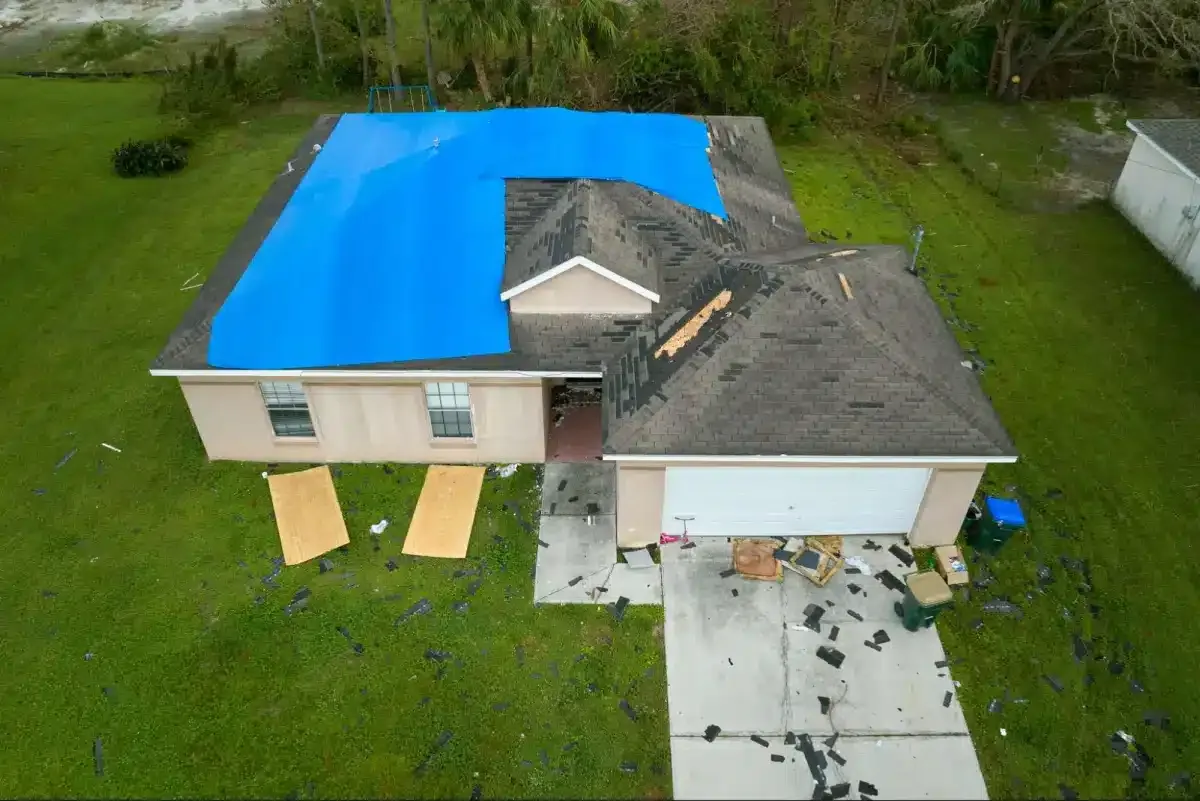
Hail rarely punches obvious holes. It bruises asphalt shingles, fracturing the mat underneath so the shingle fails months later. Wind lifts shingle edges and snaps the sealant strips that hold them down, which you can’t see from the driveway. A roofer who climbs up, photographs the damage, and writes it up gives you a documented baseline before an insurance adjuster ever shows up. That documentation is what keeps damage from being missed or lowballed later.

A good local roofer also tells you the truth about whether to file at all. If the repair comes in under your deductible, filing only creates a claim record with no payout. An inspection does not obligate you to file. It just protects your options. Cox Brothers Roofing offers free roof inspections across South Texas for exactly this reason, and the company keeps in-house insurance claim specialists who deal with adjusters daily.

There’s one more practical reason to call a roofer fast. When a storm hits a whole town, the reputable local crews book up within days. Getting on the schedule early beats waiting two weeks with a tarp flapping in the wind.

When to Call Your Insurance Company First

Call your insurer first when your policy explicitly requires pre-repair notice, or when damage is severe enough that you need the claim opened immediately to start the clock on payment.

Read your declarations page or call your agent and ask one direct question: does my policy require me to report damage before any work starts? Some carriers tighten their language and can deny coverage if a contractor begins work before their adjuster inspects. If that’s your situation, report the damage, then schedule a roofer to inspect at the same time as the adjuster so nothing gets overlooked.

Even when you call insurance first, you are not on your own with the adjuster. A homeowner who has a roofer present during the adjuster’s visit tends to get a fairer assessment, because two trained people are looking at the same roof and comparing notes. For hail damage specifically, that second set of eyes often makes the difference between a patch-job estimate and a full approval.

What Counts as Roof Storm Damage in South Texas

South Texas roof storm damage usually means hail bruising, wind-lifted or missing shingles, and debris impact, much of which stays hidden from ground level for weeks after the storm.

This part of Texas sits inside “Hail Alley,” the corridor where warm Gulf air slams into cold fronts and spits out large, frequent hail. Peak season runs March through June, with April and May the worst months. The South Texas area alone logged 222 ground-truth hail reports in a recent twelve-month stretch and sat under severe weather warnings 42 times. Severe storms on May 26 and 27, 2025 left many in the area with hidden roof damage, and back in April 2016, baseball-sized hail caused roughly $1.4 billion in damage across the city.

Towns like Cuero, Victoria, Goliad, and Gonzales catch the same systems. The damage signs to watch for include dark bruises or dimples on shingles, granules collecting in gutters and downspouts, lifted or missing shingles, dented metal flashing or vents, and water stains spreading across ceilings or in the attic. Some of these show up the day after. Others take weeks or months to surface, which is why a post-storm inspection beats waiting for a leak.

Insurance advisor reviewing policy documents
Roof Storm Damage in South Texas: When to Call a Roofer vs. Your Insurance First 6

How the Texas Roof Insurance Claim Process Works

A Texas roof storm damage claim follows a set timeline. File the claim, the insurer acknowledges within 15 days, an adjuster inspects, and payment comes in one or two parts depending on your policy type.

Start with the deadlines, because they’re unforgiving. Texas law sets a floor of one year from the date of loss to file a claim, and the statute of limitations for taking legal action against an insurer is generally two years. But your policy can demand notice much sooner, sometimes within 90 to 180 days. The practical advice from claim professionals: inspect, document, and file within 30 to 60 days of the storm whenever possible. That timing gives you the strongest shot at approval.

Once you file, the Texas Prompt Payment of Claims Act (Insurance Code Chapter 542) puts the insurer on a clock too. The carrier must acknowledge your claim and begin investigating within 15 calendar days, then issue a coverage decision within 15 business days of receiving everything they requested. Miss those deadlines and the insurer can owe you 18 percent annual interest plus attorney’s fees.

Then comes the part that surprises people: how you get paid. Two terms matter here.

  • Actual Cash Value (ACV): the depreciated value of your roof. The insurer pays this first and holds back depreciation.
  • Replacement Cost Value (RCV): what it actually costs to put on a new roof. You collect the held-back “recoverable depreciation” once repairs are finished and documented.

For an older roof, depreciation can run 40 to 60 percent of the gross estimate. That means the first check may not cover the full job, and you recover the rest only after the work is done. Understanding this before you sign anything keeps you from being caught short mid-project. Cox Brothers Roofing’s team helps homeowners read these payouts correctly, and the company has a dedicated page on the Texas roof insurance claim process.

Storm Chaser Scams: Red Flags to Avoid

The biggest red flag in Texas is any roofer who offers to waive, absorb, or pay your deductible, because that is illegal under state law and almost always signals corner-cutting or fraud.

After a big storm, out-of-town crews flood South Texas neighborhoods knocking on doors. Some are legitimate. Many are not. The classic pitch is a stranger telling you your roof “looks bad from the street” and pushing to climb up right now. The other classic pitch is the deductible offer.

Under Texas Insurance Code Section 707.002, it’s illegal for a contractor to waive or rebate your insurance deductible. The penalty reaches up to a $2,000 fine and six months in jail. The reason it’s a scam: the contractor recovers that “free” deductible by cutting corners, using cheaper materials, or inflating the bill to your insurer. If anyone makes that offer, report it to the Texas Attorney General’s Consumer Protection Hotline at 800-621-0508.

A few more warning signs worth memorizing:

  • Door-to-door solicitation right after a storm, especially with out-of-town plates or only out-of-town references.
  • Pressure to sign immediately or to sign a contract with blank spaces.
  • Demands for full payment up front.
  • No written estimate on company letterhead with real local contact information.

The Texas Department of Insurance has published guidance on these scams, and its advice on replacing your roof is worth a read before you sign anything. Working with an established, locally owned company like Cox Brothers Roofing, based at a fixed Cuero address with a Cuero Chamber of Commerce membership, sidesteps most of this risk.

What Roof Repair and Replacement Costs in South Texas

In 2026, a full roof replacement in the South Texas market typically costs $12,500 to $18,000 for architectural asphalt shingles, while smaller repairs run a few hundred to a couple thousand dollars.

These numbers help you judge whether a claim makes sense against your deductible and whether a contractor’s bid is in a sane range. Prices below are current as of June 2026 and vary with roof size, pitch, material, and access.

ServiceTypical South Texas costWhat drives the price
Roof inspectionFree to $200Many local roofers, including Cox Brothers, inspect free after storms
Minor repair (few shingles, small leak)$350 to $1,500Extent of damage, roof height and pitch
Major repair / partial replacement$1,500 to $5,000Square footage affected, decking damage
Full replacement, architectural asphalt$12,500 to $18,000Home size, tear-off, material grade
Asphalt shingle, per square foot installed$3.50 to $7.00Material tier, labor, complexity
Tear-off and disposal$1.00 to $3.00 per sq ftNumber of old layers, dump fees
Permit (full replacement)$150 to $400Local jurisdiction

If your damage estimate lands well above your deductible, a claim usually pays off. If it lands below, an honest roofer will tell you to skip the claim. For a deeper breakdown of options, Cox Brothers covers roof replacement and repair across its South Texas service area.

Why a Roofer With an In-House Insurance Team Matters

A roofer who employs insurance claim specialists can document damage, meet the adjuster, explain ACV and RCV payouts, and keep the claim moving, which removes most of the guesswork for the homeowner.

Cox Brothers Roofing fits the profile this guide describes. The company is locally owned and operated out of Cuero and serves the surrounding South Texas towns including Victoria, Goliad, Gonzales, Hallettsville, and Yoakum, and installs TAMKO shingle products. What sets it apart for storm claims is the in-house insurance team, the people who specialize in homeowner roof claims and sit with you through the adjuster visit and the depreciation paperwork.

That combination matters because the two hardest parts of a storm claim are spotting all the damage and decoding the payout. A crew that does both under one roof means you’re not juggling a separate roofer, public adjuster, and insurer on your own.

How We Put This Guide Together

This guide draws on current Texas insurance law, state regulatory guidance, 2026 South Texas pricing data, and the day-to-day claim experience of a local roofing team.

The recommendations here reflect a few sources working together. Filing deadlines and payment timelines come from the Texas Insurance Code, including Chapter 542 and Section 707.002. Scam guidance comes from the Texas Department of Insurance and the Texas Attorney General’s office. Hail frequency figures come from regional storm-reporting data. Pricing reflects 2026 South Texas roofing market data. The decision framework reflects how experienced roofers actually advise homeowners after a storm, reviewed by the insurance claim team at Cox Brothers Roofing.

Contractor installing standing seam roof
Roof Storm Damage in South Texas: When to Call a Roofer vs. Your Insurance First 7


Frequently Asked Questions

Should I call a roofer or my insurance company first after a storm?

For most hail and wind damage, call a roofer first for a free inspection, then file the claim, unless your policy requires you to notify the insurer before any work begins.

A roofer’s inspection documents the damage properly and tells you whether the repair even exceeds your deductible. The one exception is a policy that demands pre-repair notice, in which case you report to the insurer first and have a roofer inspect alongside the adjuster.

How long do I have to file a roof storm damage claim in Texas?

Texas law sets a minimum of one year from the date of loss to file, but many policies require notice within 90 to 180 days, so filing within 30 to 60 days is safest.

The two-year window people sometimes hear about is the statute of limitations for suing an insurer, not the deadline to report damage. Always check your own policy, because carriers set their own reporting windows.

Can a roofer pay or waive my insurance deductible in Texas?

No. Waiving, absorbing, or rebating an insurance deductible is illegal in Texas under Insurance Code Section 707.002, with penalties up to a $2,000 fine and six months in jail.

Any contractor offering this is a red flag for fraud or shoddy work. Report the offer to the Texas Attorney General’s Consumer Protection Hotline at 800-621-0508.

How much does a new roof cost in South Texas in 2026?

A full architectural asphalt shingle replacement typically costs $12,500 to $18,000 in 2026, or roughly $3.50 to $7.00 per square foot installed.

Final cost depends on home size, roof pitch, tear-off, and material grade. Smaller repairs often fall between $350 and $5,000.

Will my insurance pay the full cost of a new roof?

Not always at first. If your policy pays Replacement Cost Value, the insurer issues an Actual Cash Value check up front and releases the held-back depreciation after repairs are finished.

For older roofs, depreciation can reach 40 to 60 percent of the estimate, so the first payment may not cover the full job until the work is documented as complete.

How can I tell a storm chaser from a legitimate local roofer?

Storm chasers solicit door to door right after storms, push you to sign fast, ask for full payment up front, and often have only out-of-town references or plates.

A legitimate local roofer has a fixed local address, provides written estimates on letterhead, carries verifiable references, and never offers to waive your deductible.

Conclusion

The safe play after a South Texas storm is simple: get a free roofer inspection first, confirm whether your policy requires insurer notice before repairs, then file within 30 to 60 days while documentation is fresh.

Roof storm damage hides well, deadlines move faster than they look, and the deductible-waiving crews that show up after every big hailstorm are best ignored. Cox Brothers Roofing handles it all, from the inspection to the first adjuster meeting. Homeowners across Cuero, Victoria, and the rest of South Texas can schedule a storm damage inspection.

Menu