You may spot a roof problem while walking around the yard or cleaning a room. Make a note of what changed and when you noticed it. You can share those details with a roofer without climbing onto the roof.
Use this list from safe places around your home. If a storm has damaged the building, keep out of unsafe rooms and attics.
Signs outside your home
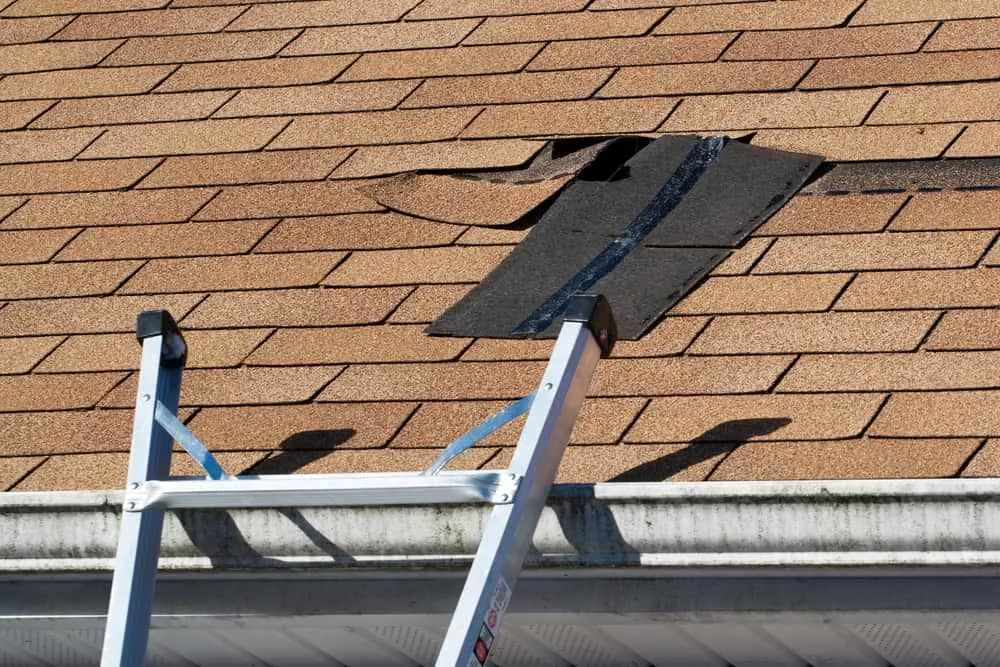
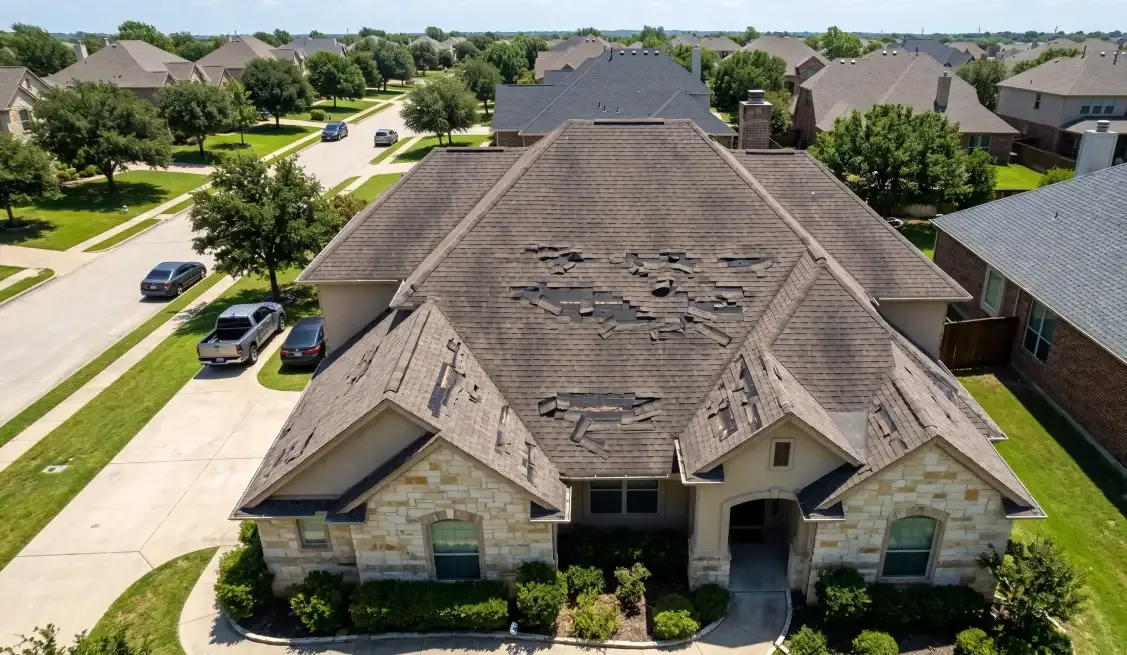
1. Missing or bent shingles
Look for gaps or changes in the roof surface. You may see shingles that have lifted, cracked or curled. A roofer can check the cause and explain whether a repair is enough.
2. New piles of granules
Look near the downspout outlets from the ground. A change in the amount of grit may need a closer look. Some granule loss is normal, so loose granules alone do not prove the roof has failed.
3. Moss or dark streaks
Note where the growth or streaks appear. Have the cause checked before using a cleaner. The roof maker’s care guide should help decide which methods are safe for that product.
4. A new dip in the roofline
A new or growing sag can be serious. Keep clear of the area below it and get prompt help. Do not climb onto the roof to test it. Call 911 if people face immediate danger.
5. Loose or sagging gutters
Gutters may pull away because of damaged supports, added weight or other problems. The wall trim and roof edge may need a check, too. A loose gutter does not prove the roof above it has failed.
Signs inside your home
6. A new ceiling stain
Take a photo and note whether the stain grows after rain. Water can travel before it reaches the ceiling. Roof leaks, plumbing and other moisture sources can leave similar marks.
7. A visible opening in the roof
A hole needs prompt attention from a roofer. Light through a designed vent is not the same as storm damage. Stay out of a damaged attic, and do not try to tarp an opening from inside it.
8. A damp or musty smell
A smell can point to a moisture problem, but it does not tell you the source or how long it has been there. Ask for help finding the cause. Do not assume every damp room has a roof leak.
9. A change in heating or cooling costs
Check weather, rates and use before blaming the roof. Air leaks, insulation and equipment can also affect energy costs. A home energy check may help narrow down the cause.
10. Drips or bubbling paint
An active leak needs prompt help. Keep clear of wet wiring, bulging ceilings and loose drywall. Do not poke or cut into a wet ceiling. See our roof leak guide for the first steps.
What to tell your roofer
Share safe photos, the date you noticed the issue and any recent storm history. Ask for the findings, limits of the inspection and a written repair scope. No honest inspection can promise that all hidden damage is visible.
Texas does not issue a statewide roofing contractor license. Check insurance and references, and ask who issued any claimed credential. Our contractor checklist can help.
If storm damage may be involved, contact your insurer promptly about reporting rules. Do not delay required notice while waiting for the roof visit.
Get help with a change in your roof
Cox Brothers Roofing offers free roof inspections in Cuero, Victoria, Goliad and nearby areas. Request an inspection or call (361) 277-0014. Tell us if you have an active leak when you call.